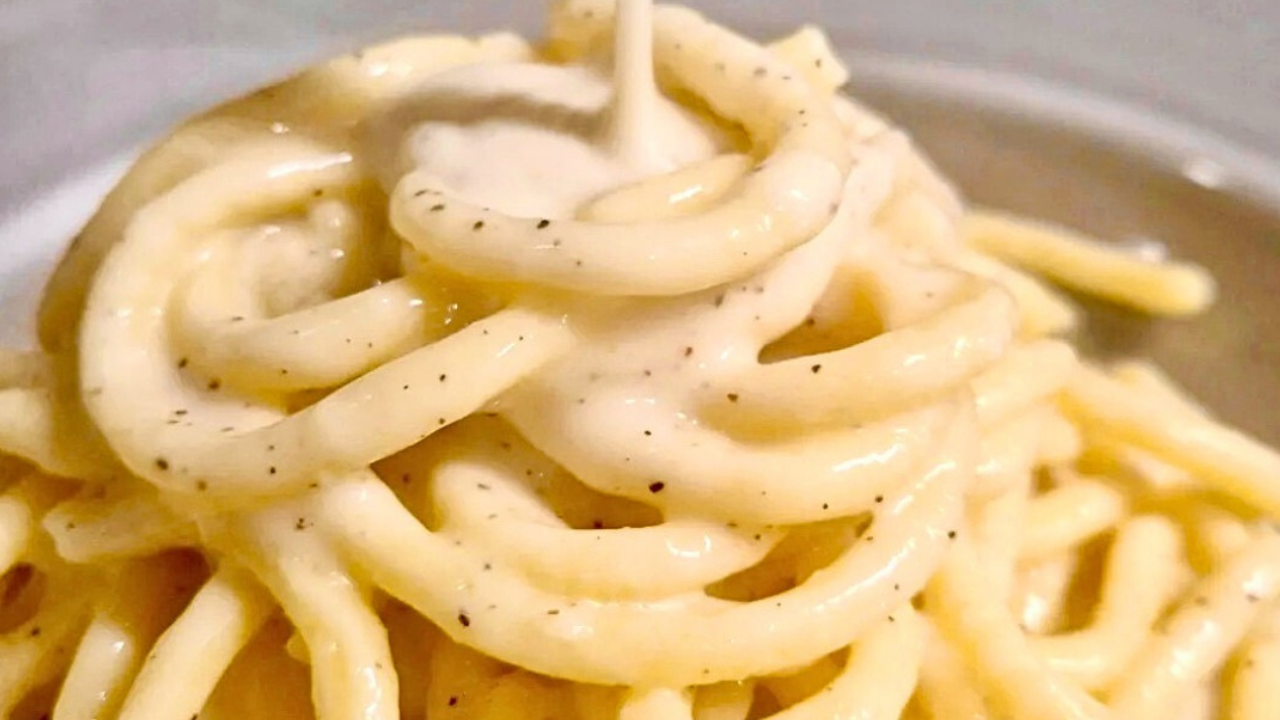



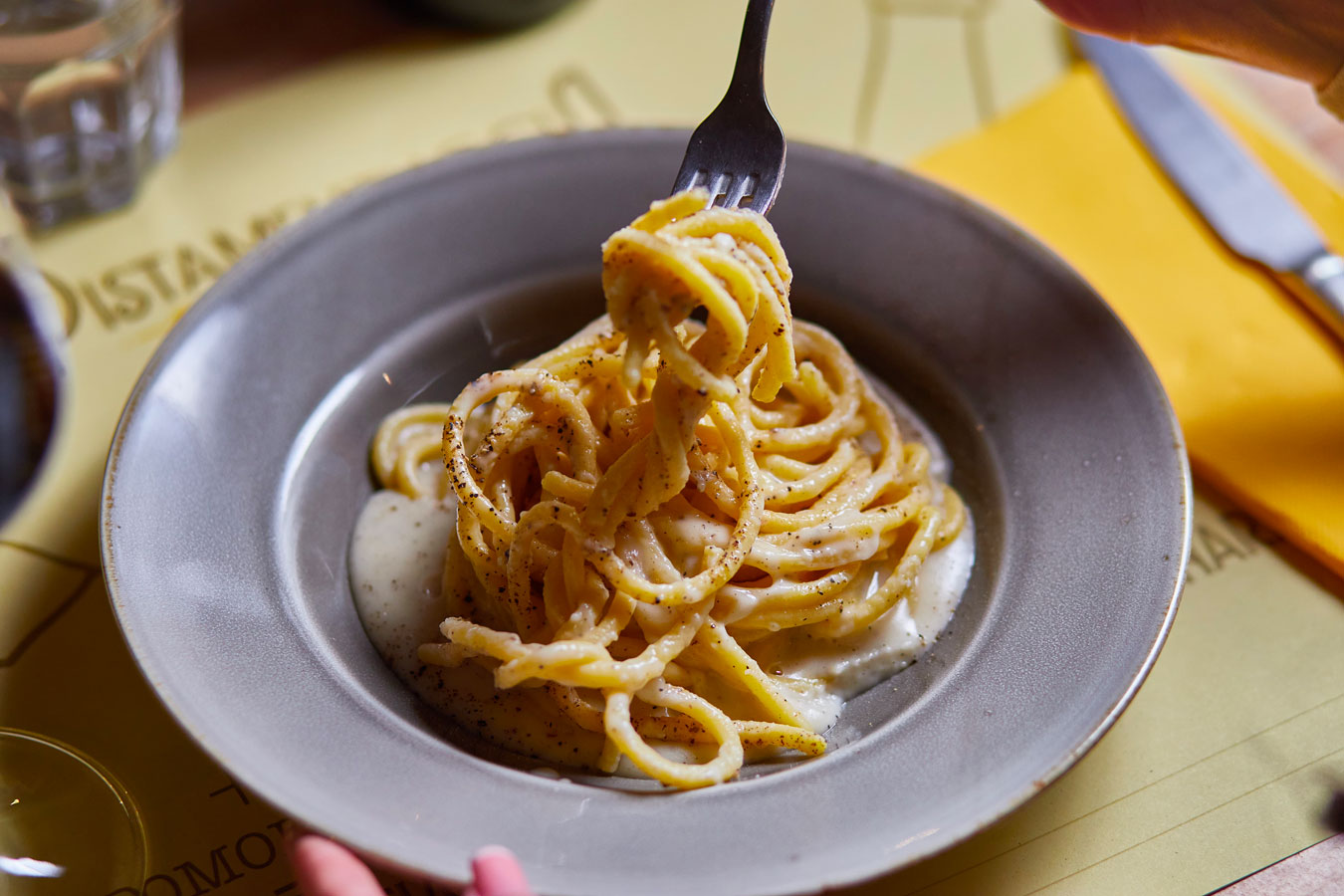
Tonnarelli cacio e pepe is a unique and delicious dish from the roman culinary tradition. It is a type of long pasta that we make in-house at Pistamentuccia, completely by hand, come ‘na volta—just the way they used to in the old days.
If you love bold flavours and quick, simple pasta dishes with a truly unique taste, you simply cannot resist the pull of this enveloping creaminess. Cacio e pepe proves that a few simple ingredients can create highly renowned dishes, without the need for any additions or tweaks.
Where does it come from?
Like many of the best dishes in roman and Italian gastronomy, cacio e pepe has its roots in peasant traditions. To be precise, it was invented by shepherds who, while out for the day, would carry easy-to-cook ingredients with them, like cheese, pasta, and black pepper.
Over the years, this pasta has become famous worldwide for its sauce that is both creamy and wonderfully sharp at the same time.
What makes this dish so special?
Today, making it is a true art form that requires skill and an eye for detail, as it is crucial to find the perfect balance between the creaminess of the cheese (note: the pecorino must be creamy, not stringy!) and the bold kick of the black pepper.
With their blend of simplicity and complex flavours, tonnarelli cacio e pepe bring the history and deep-rooted traditions of roman cooking straight to your table, delivering a hearty, rich plate of food that hits the spot every single time.
How is it made?
One of the little tricks to making the perfect cacio e pepe is toasting the pepper and making a thick pecorino sauce.
While the pasta boils (and for us, tonnarelli is the only way to go!), lightly toast the black pepper in a separate pan, add a ladle of pasta water, and drain the pasta while it is still very al dente so it can finish cooking in the pan. The heat allows the pasta to absorb all the aromatic notes of the pepper, which will later bind beautifully with the pecorino sauce you have prepared.
The pecorino sauce (which must be added off the heat) is made with a mix of starchy pasta water and grated pecorino. The mixture should be quite thick, almost like a paste.
Once the pasta has finished cooking in the pan, turn off the heat and add the pecorino sauce, tossing it vigorously with the pasta: avoid doing this if the pan is too hot, otherwise you will end up with clumpy pecorino that doesn’t bind to the dish at all. Stir thoroughly and you will see your cacio e pepe come together perfectly.
Finish it off with a fresh grind of black pepper and serve it piping hot!
Did you know the origins and secrets behind making cacio e pepe? Noi, pe’ favvela assaggiare—well, to make sure you get to taste it, we brought it all the way to Bologna!