


There is a precise moment you truly understand what Roman cuisine is: when you sit down in front of a plate of pasta and realise that behind that apparent simplicity lie centuries of history, long walks along the Apennine sheep tracks, real hunger, and grassroots creativity. Roman pasta dishes are not just recipes; they are a story that spans from the harsh life of transhumant shepherds to post-war kitchens, passing through the streets of Rome that smelled of guanciale and pecorino. We are talking about the Magnificent 4 – Cacio e Pepe,
In this article, we’ll tell you the story behind each one, their (often surprising) origins, their differences, and a few preparation secrets. And no, cream doesn’t go anywhere near it. Ever.
The family tree of Roman pasta: a history rich in flavour
Before diving into the details of each dish, it is useful to understand how these four Roman classics are related, much like an extended family with a common ancestor:
- Cacio e Pepe: pecorino romano and black pepper, the foundation of the main dishes.
- Gricia: pecorino, pepper, and guanciale; the “mother” of Roman pastas.
- Amatriciana: gricia with the addition of tomato; the “red” evolution, born when the tomato arrived from the “New World”.
- Carbonara: gricia with the addition of egg; the newcomer, a child of the post-war period and the meeting of culinary cultures from across the globe.
Each dish is just the previous one with an extra ingredient. It’s a historical and gastronomic progression showing how grassroots cooking transforms over time, adapting to available resources and societal changes.
Cacio e Pepe: simplicity and precision
Origins: the primal core of it all
Historically,
The recipe in brief
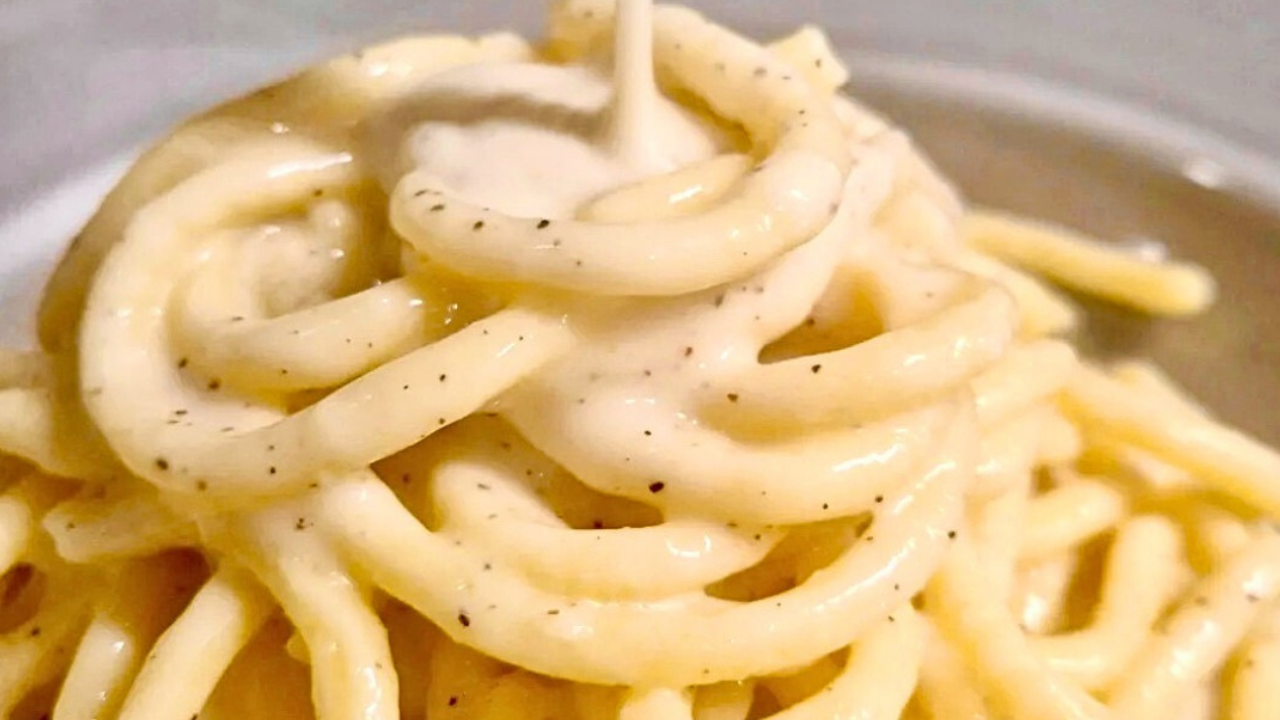
Cacio e Pepe is the most technical recipe of them all. Despite its apparent simplicity, there are many mistakes you can make when preparing it, starting with its creamy sauce. You must be careful to avoid the lumps that form when the pecorino exceeds 60-65°C and the proteins separate from the fats.
The starch in the pasta water is your true ally: its glucose chains interpose themselves between the cheese proteins, preventing coagulation and helping to create a smooth sauce. The pepper must be dry-toasted in the pan before proceeding, to release its essential oils and add aromatic depth.
Gricia: the mother of all Roman pastas
Shepherds, transhumance, and the mystery of the name
To understand where ancient Roman recipes come from, you have to follow the flocks along the sheep tracks of the Central Apennines.
The name “Gricia” has two possible origins, both well-documented. The first suggests it derives from the village of Grisciano, a small hamlet in the municipality of Accumoli (Rieti), from where the recipe supposedly spread along the transhumance routes. The second theory claims the term refers to the
The recipe in brief
Guanciale in a frying pan without oil, over medium heat, until it is crispy on the outside and still soft on the inside. The melted fat is essential: it must not be thrown away, but rather used to bind the pasta with pecorino romano and cooking water. Three ingredients, zero shortcuts.
Amatriciana: when the arrival of the tomato changed everything
From Gricia to the red version, via Naples
Amatriciana is a direct descendant of Gricia, and its birth is linked to one of the great gastronomic shifts of modern history: the introduction of the tomato. The path is less straightforward than you might think. The territory of
The recipe was later brought to Rome by shepherds during the transhumance and, in the second half of the 19th century, by the people of Amatrice who settled in the capital following the decline of sheep farming. During that period, the term
Preparation and debunking false myths
The traditional recipe is clear: no garlic, no onion, guanciale (not pancetta), pecorino, San Marzano tomatoes or peeled plum tomatoes, and a splash of
Carbonara, the undisputed queen of the menu
The post-war era, Allied rations, and Renato Gualandi
Carbonara is the most famous Roman dish in the world, yet it also boasts the most recent and controversial history of the four. Contrary to what you might think, it doesn’t have ancient origins: its birth is tied to the
The theory most widely accepted by gastronomic historians points to a young cook from Bologna named Renato Gualandi.
It is important to clarify that Gualandi’s dish was a precursor to Carbonara, not the recipe we know today: he used milk cream and powdered eggs, a far cry from the modern version.
The recipe in brief
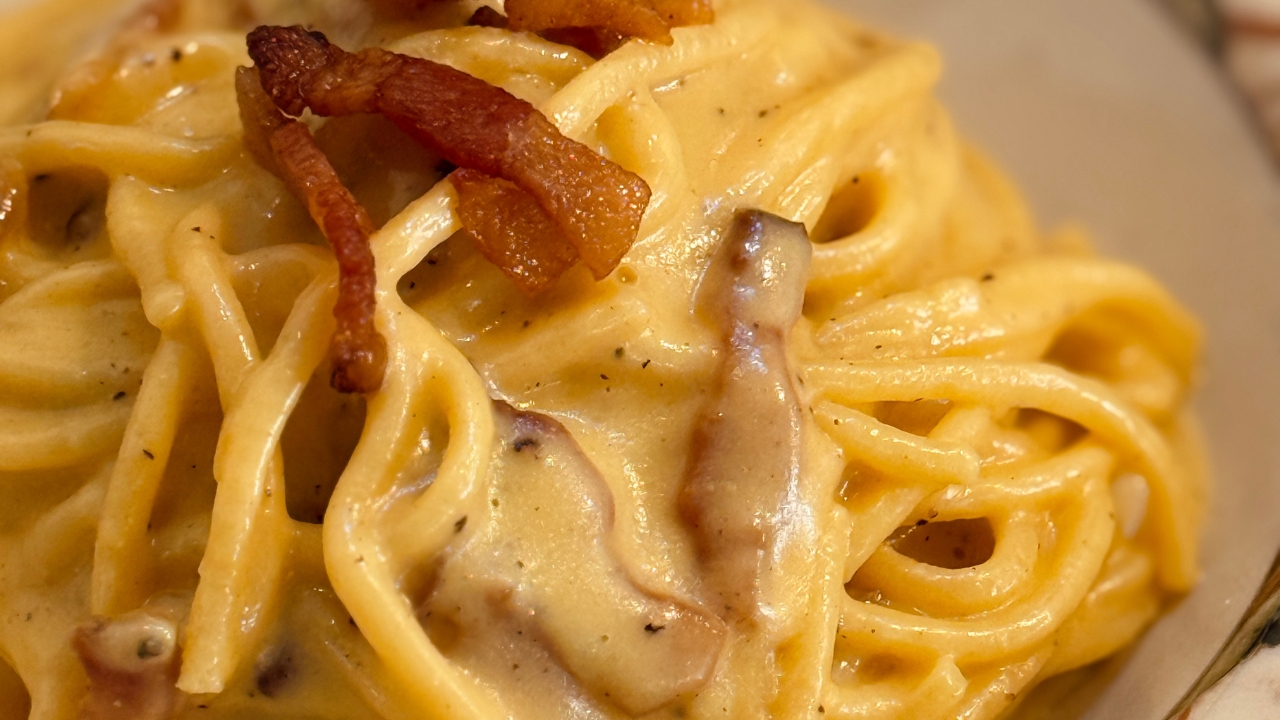
The egg must not cook. The mixture of egg yolks, pecorino romano, pepper, and guanciale fat is added to the pasta
The rules are well-known but non-negotiable: no cream, no pancetta, no parmesan (except for a tiny bit to mellow the saltiness, though purists won’t budge), no garlic, no onion.
The Magnificent 4 at Pistamentuccia: Rome in the heart of Bologna
Four dishes, one single philosophy: carefully selected ingredients, technique that respects tradition, and zero compromises. At Pistamentuccia in Bologna, we serve
Se vuoi assaggiare la differenza tra una carbonara fatta bene e una “con la panna”, tra un’amatriciana con il guanciale e una con la pancetta, vieni a trovarci. Book a table on our website or message us on WhatsApp: we’ll make sure you have a cracking evening, guaranteed.