


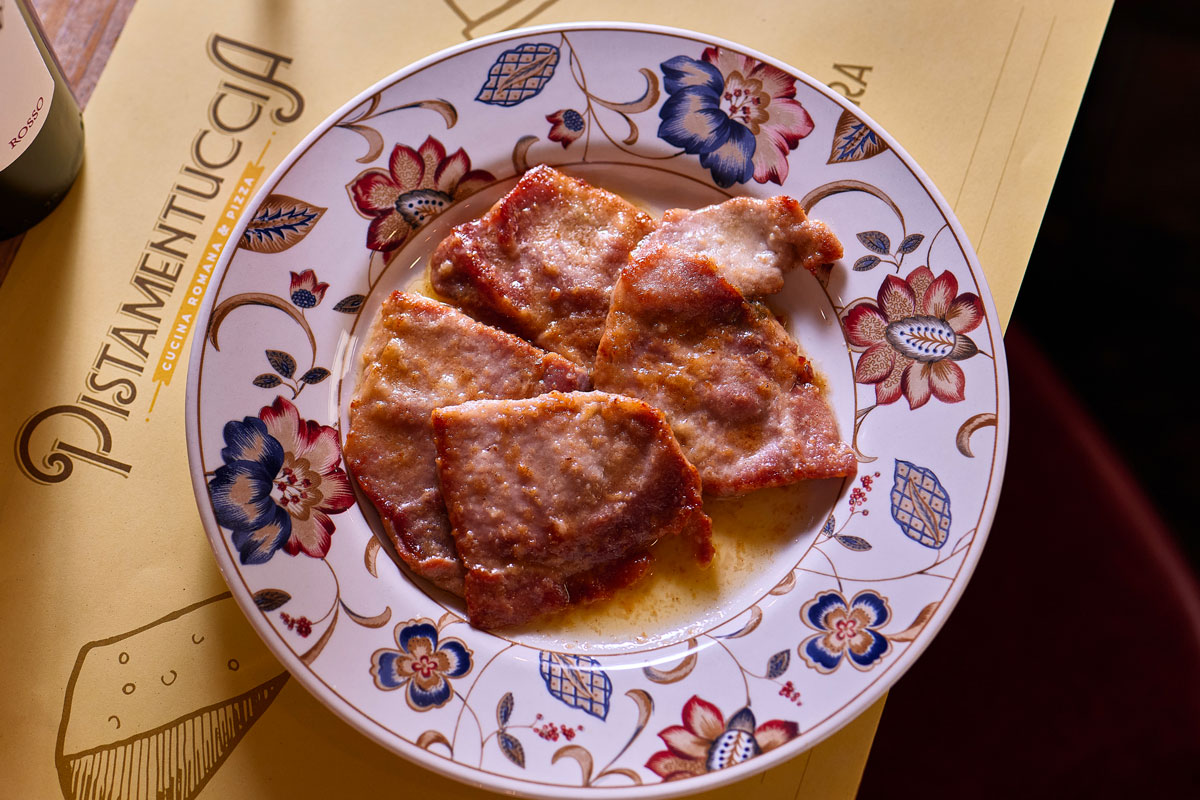
Saltimbocca is a delicious main course typical of roman cuisine that has always been a hit with all ages.
How are they made? Read on and find out with us.
The origins
The saltimbocca recipe has deep roots in peasant cooking, and although the earliest records of this dish are linked to the city of Brescia, Rome made this recipe its own, turning it into a true icon of roman cuisine.
Saltimbocca are so loved across Italy that, over the years, they have picked up various tweaks, such as rolling them up like little parcels, or cooking them with added flour, oil, and other seasonings.
Why are saltimbocca called that?
A quirky feature of saltimbocca alla romana is, in fact, its rather unusual name, which never fails to spark curiosity in tourists and locals alike. The name “saltimbocca” is a nod to its incredible taste—it is so good it literally jumps in the mouth (salta in bocca)—but also to how it is made. Being relatively small, thin slices of veal, saltimbocca are perfectly sized to be enjoyed (almost) in a single bite!
The authentic recipe
It consists of small slices of milk-fed veal, lightly seasoned with salt and pepper. On top of each one sits half a sage leaf and a small slice of prosciutto crudo. To hold these three elements together, they are pinned with a toothpick and cooked as one, finished with a splash of white wine and a knob of butter. Served piping hot, it is a quick and practical dish, highly appreciated for its sheer simplicity.
Paired with a fresh, crunchy side dish like our puntarelle or carciofo alla giudia, they are an absolute match made in heaven: tasting is believing!
Here at Pistamentuccia, we know there is only one true recipe, and tradition teaches us exactly how it is done.
Are you curious to discover the authentic flavours of roman cuisine?
We look forward to welcoming you to our restaurant in the centre of Bologna.