


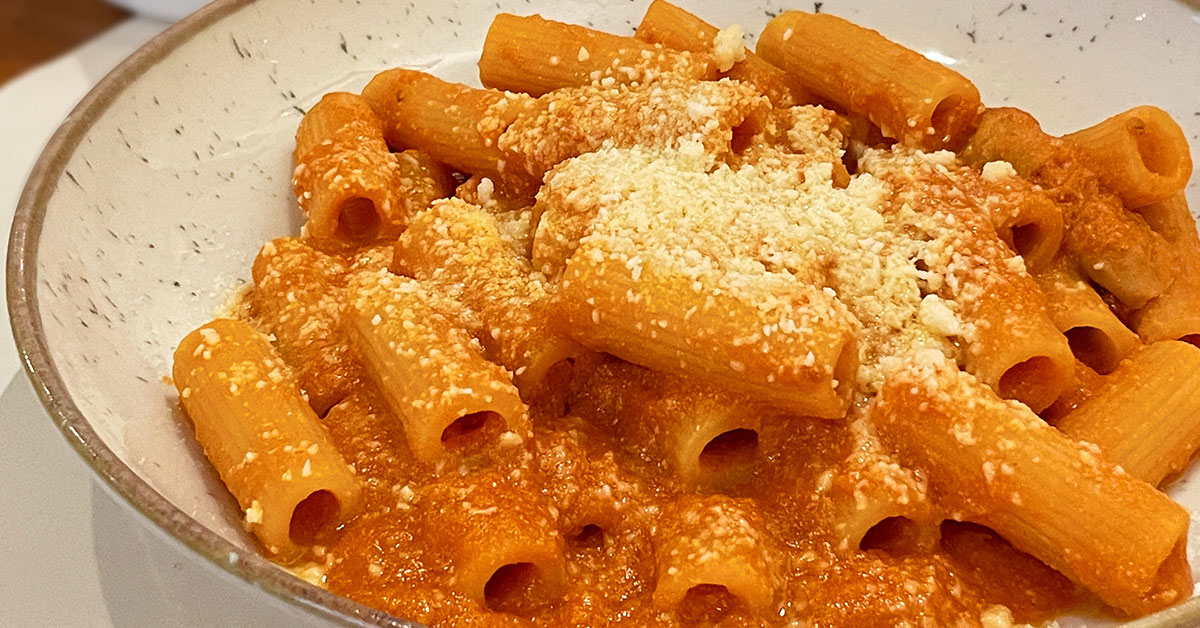
If you are a lover of the most authentic Roman cuisine, mark your calendar: exclusively for the month of March, at Pistamentuccia you will find rigatoni alla pajata during the first three days of the week. It is a special opportunity pe’ gustasse ‘sto piatto romano—to truly savour this classic Roman dish made from calf’s intestine, prepared exactly to tradition.
The authentic flavour of Roman offal
Roman pajata is one of the signature dishes of Capitoline cuisine, belonging to the tradition of the “quinto quarto” (the fifth quarter), which is the art of cooking veal offal and other less noble cuts. This dish traces its roots back to the 18th century, when slaughterhouse workers, known as “vaccinari” or “scortichini”, received the offal of butchered animals as part of their wages. In an era where nothing went to waste, these so-called poor cuts were transformed into dishes rich in flavour and substance. Dicono che so’ ‘na robba povera, ma quanno ‘na pajata è fatta bene, te senti ‘n imperatore a tavola!—They say it’s peasant food, but when a pajata is done right, you’ll feel like an emperor at the table!
Roman osterias and trattorias turned pajata into a gastronomic icon, serving it with pasta or slow-cooked in a stew. Thanks to its history and authenticity, the dish is today considered one of the highest expressions of Roman culinary tradition, appreciated by connoisseurs and anyone wanting to rediscover the genuine flavours of grassroots cooking.
What is pajata? The secret of the calf's intestine and the chyme
For anyone wondering what pajata is, the answer is simple: it is the intestine of an unweaned calf, which contains chyme inside it, a milky substance derived from undigested milk. During cooking, the chyme coagulates, creating a thick, savoury cream that makes rigatoni with pajata a truly one-of-a-kind gastronomic experience.
Rigatoni: the perfect pasta shape for pajata
If pajata is the soul of the dish, rigatoni is its perfect body. Thanks to their cylindrical shape and ridged surface, they hold onto the sauce flawlessly, ensuring a rich, flavour-packed bite with every forkful. This pasta shape boasts an ancient history, with roots deep in the traditions of Central and Southern Italy, particularly across Lazio, Campania, and Sicily.
The name rigatoni stems from the word “rigato” (ridged), which describes the characteristic grooves on the surface—essential for clinging onto sauces and making every mouthful even tastier. Always taking centre stage in grassroots dishes, rigatoni has established itself as the perfect shape to elevate robust, intense sauces like pajata, confirming its role as a pillar of Roman gastronomy.
Only in March at Pistamentuccia: don't miss out on real rigatoni alla pajata!
If you want to taste authentic Roman pajata, hurry: exclusively in March, every Monday, Tuesday, and Wednesday, Pistamentuccia te porta ‘n tavola ‘sto capolavoro de piatto romano!—we are bringing this masterpiece of a Roman dish straight to your table! Book your table and come to Bologna to enjoy proper rigatoni alla pajata, exactly as tradition dictates!