


When it comes to Roman cuisine, and beyond, few questions divide food lovers as much as this one: guanciale or pancetta? A choice that seems trivial, but actually completely changes the character of a dish. Behind these two cured meats lie history, tradition, technical differences, and even matters of personal taste. Let’s discover everything there is to know together.
What is the difference between guanciale and pancetta?
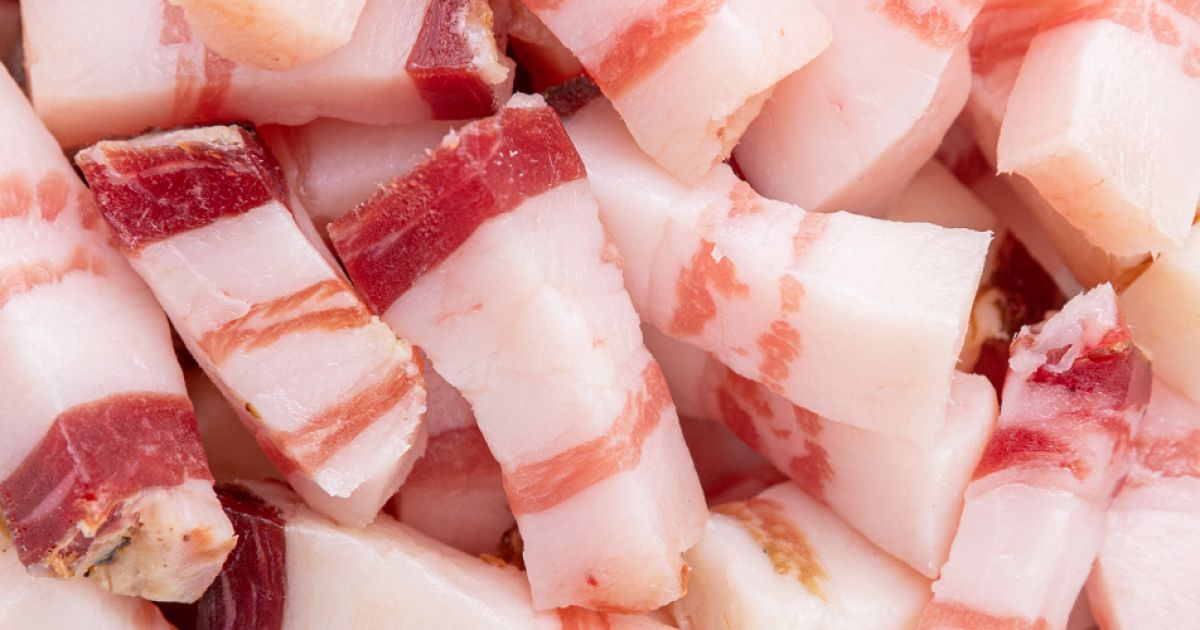
Guanciale is a cured meat made from pork cheek, which is where it gets its name. Pancetta, on the other hand, is obtained from the pork belly. This already leads to a fundamental first difference: guanciale has a firmer part and fat that melts slowly during cooking, while pancetta is softer and features more layers of fat and lean meat.
From a flavour perspective, guanciale has a more intense and robust taste, with spicy notes and a texture that provides crunchiness when browned. Pancetta, instead, is sweeter, more delicate, and versatile, capable of adapting to many dishes.
Nutrition and characteristics
Nutritionally speaking, guanciale and pancetta are similar: both are rich in saturated fats, protein, and calories. They are certainly not light foods, but they provide energy and satisfaction. Guanciale, having a higher percentage of fat, is more caloric than pancetta. At the same time, however, the fat in guanciale is what gives structure and creaminess to dishes without the need for other condiments. The key, as always, is moderation.
Many wonder: is guanciale or pancetta fattier? The answer isn’t straightforward. By percentage, guanciale contains a higher ratio of fat to lean meat, and it’s precisely this characteristic that makes it ideal for dishes like Carbonara or Amatriciana. Pancetta, while also fatty, has a more balanced distribution. In terms of calories, though, the differences aren’t huge: both cuts should be consumed in moderation, but they offer an unparalleled richness of flavour.
The right choice for pasta dishes
One of the most frequent questions in the kitchen is exactly this: pasta with pancetta or guanciale? The answer depends on the dish. If we are talking about traditional Roman recipes, there is no contest: guanciale is the only authentic choice. We know that the original is strictly er guanciale d’Amatrice, but nun ve preoccupate—don’t worry, here at Pistamentuccia we always serve it exactly as it should be! But in other cases, such as quicker home-cooked meals, pancetta is often used as a cheaper and easily available alternative. It’s not uncommon to find it in the kitchens of those who want to whip up a quick meal without sacrificing a touch of flavour. …And then the pedants will come along and say: ‘The real guanciale, the good one, is strictly from Amatrice!’
Carbonara, pancetta or guanciale?
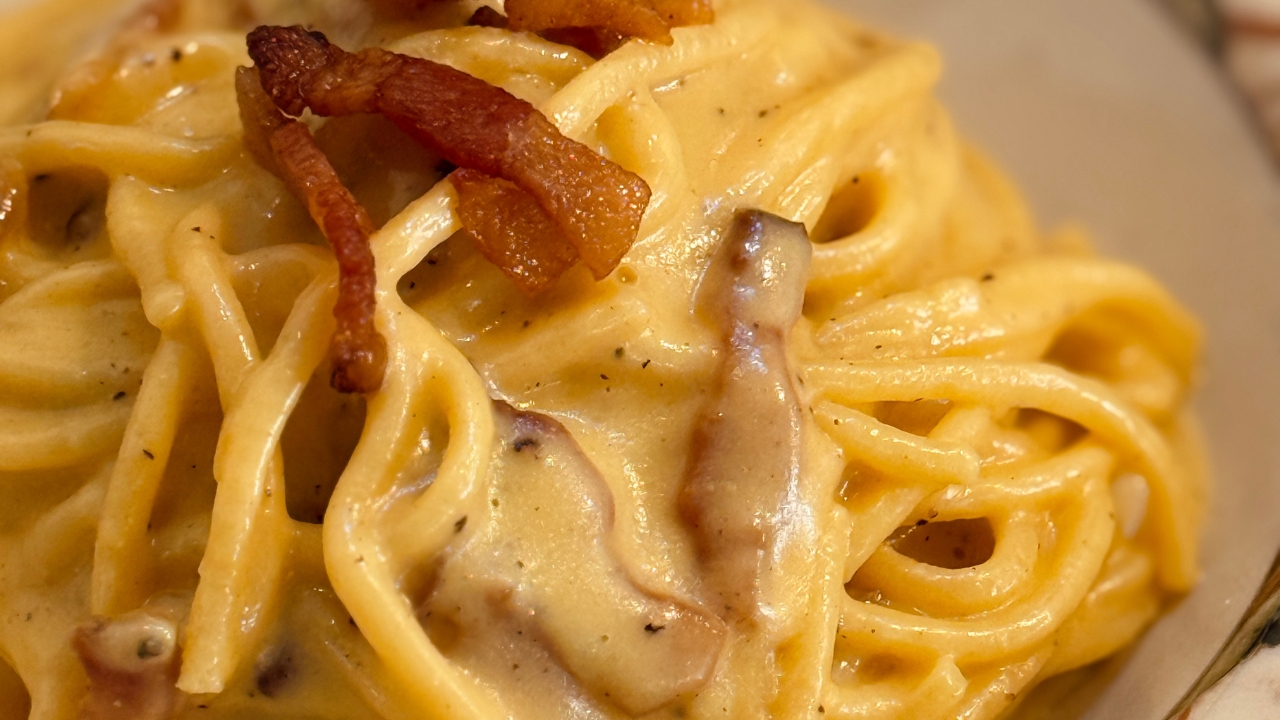
Carbonara is one of the most iconic dishes in Roman cuisine and leaves no room for doubt: Carbonara is made with guanciale. Its savouriness, its ability to become crispy without losing juiciness, and the fat that melts perfectly into the egg cream create the unique balance of this dish. Using pancetta yields a different result: less intense, sweeter, and with a less crispy texture, although it isn’t an absolute mistake… tranquilli, lo diciamo pe’ scherzà!—don’t worry, we’re only joking! For traditionalists, in short, the choice is mandatory.
Amatriciana, which to choose?
Here too, there are no compromises. The original Amatriciana exclusively calls for guanciale, alongside tomato and Pecorino Romano. It is precisely the guanciale that gives that unmistakable character to the sauce, with the fat enriching the tomato and enhancing its flavour. Anyone who swaps guanciale for pancetta still gets a good dish, but cannot call it authentic Amatriciana. ‘A differenza se sente eccome!—You can absolutely taste the difference!
Does guanciale or pancetta cost more?
Another question that often arises naturally concerns the price: does guanciale or pancetta cost more? Generally, guanciale is slightly more expensive. This is because it is a less abundant cut, requires specific processing, and is produced in more limited quantities. Pancetta, being more widespread and versatile, tends to have a more accessible price. In any case, the difference is not enormous, but enough to explain why pancetta is chosen as a substitute in many home kitchens.
The winner is taste
Whether you choose the crunchiness of guanciale or the delicacy of pancetta, every forkful tells a different story of our cuisine. The truth, however, is that solo ‘na magnata te po’ fa capì la differenza—only a good feed can make you truly understand the difference.
Come to Pistamentuccia in Bologna to try it in proper Roman dishes: message us on WhatsApp at this link. We’re waiting for you, but nun fa tardi!—don’t be late!