


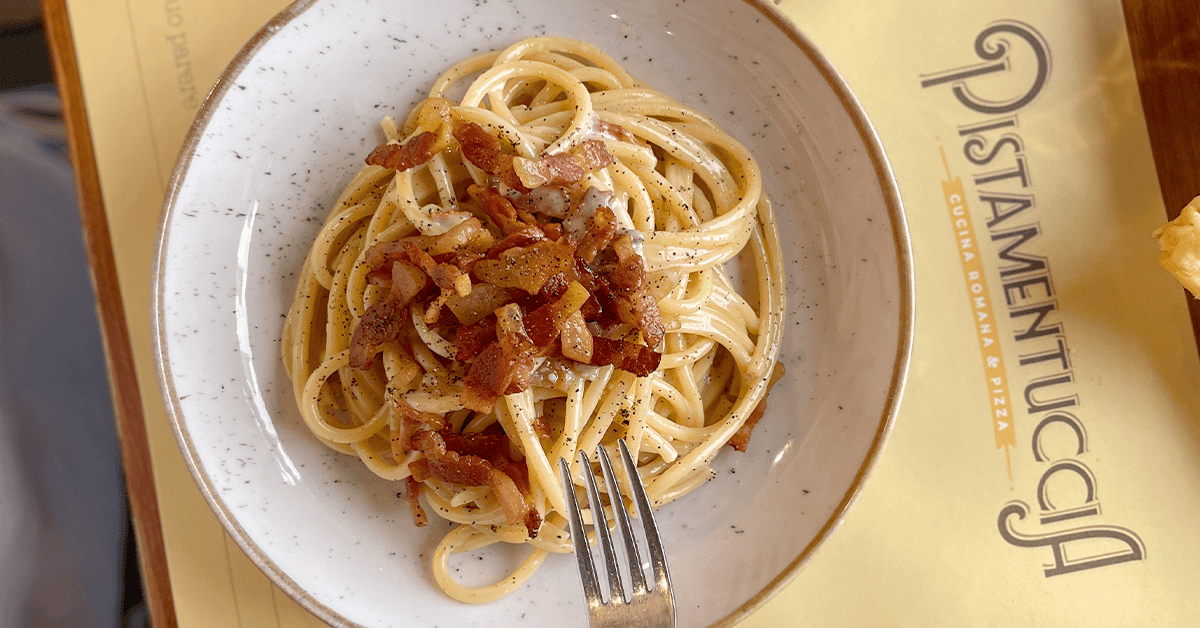
Today we are talking about pasta alla gricia, also commonly known as white amatriciana, one of the most iconic pasta dishes in traditional roman cuisine.
What is pasta alla gricia and what does it mean?
The term “gricia” comes from the modo dei grici (the way of the grici). In 19th-century Rome, the Grici were a class of traders and shopkeepers, mostly selling food, who came from the Swiss Grisons, Valtellina, or Friuli. They created a primitive version of gricia, quite different from the one we know today, made with small pieces of meat and plenty of grated pecorino.
Another school of thought suggests that the original recipe takes its name from Grisciano, a small hamlet in Accumoli, near Amatrice, in the province of Rieti. Grisciano was one of the stations along the old roman Salaria road (a famous trade crossroads). It was right here, during the transhumance, that people used the few ingredients available from those passing through—like pecorino and guanciale—giving birth to what we now call sugo alla gricia.
Gricia today: a few recipes
Nowadays, pasta alla gricia is prepared in many different ways, with subtle twists that add new ingredients and flavours, giving rise to creative variations. A few variations of pasta alla gricia include:
- Gricia with artichokes: artichokes feature in a huge portion of roman dishes. Pairing them with gricia isn’t our favourite way to eat them, but they do match this kind of pasta very well, keeping it well within the boundaries of roman tradition.
- Gricia with courgettes: we love courgettes any way you cook them, and we have to admit they aren’t bad at all with pasta alla gricia.
- Gricia with figs or pears: this is a rather unusual variation, perfect for anyone who loves to experiment and push past tradition by combining the savouriness of pecorino and guanciale with the sweetness of fruit.
At Pistamentuccia, we stay faithful to tradition, and our menu features the original recipe for pasta alla gricia using only traditional ingredients.
The ingredients of gricia
As the authentic recipe dictates, the only real ingredients for pasta alla gricia—apart from the pasta itself—are just three:
- Pecorino romano: the real deal, straight from Rome (quello proprio deRoma). At Pistamentuccia, we only use pecorino romano DOP, which we buy directly from the capital.
- Guanciale: from Amatrice, of course. Its savoury flavour and crunchy texture make pasta alla gricia the upgraded cousin of cacio e pepe.
- Black pepper: an absolute must in every dish. We romans love it everywhere, both in life and in our pasta. It gives that character and a subtle kick of heat to every plate.
Bucatini alla gricia, spaghetti or tonnarelli?
Pasta shapes are always a point of debate for us Italians: some prefer mezze maniche, some choose tonnarelli, while others stick to tradition with classic tonnarelli or bucatini.
At Pistamentuccia, we choose to stick to our family history, which means that for us, it has to be long pasta—specifically, bucatini alla gricia.
Our bucatini hold up beautifully when cooked, offering a thick and highly porous texture that is perfect for catching the gricia sauce, ensuring you savour its goodness with every single bite.
Yes, we are faithful to tradition, but non ve preoccupate—don’t you worry! If you ask our front-of-house staff, we are always ready to accommodate any request.
What is the difference between gricia and carbonara?
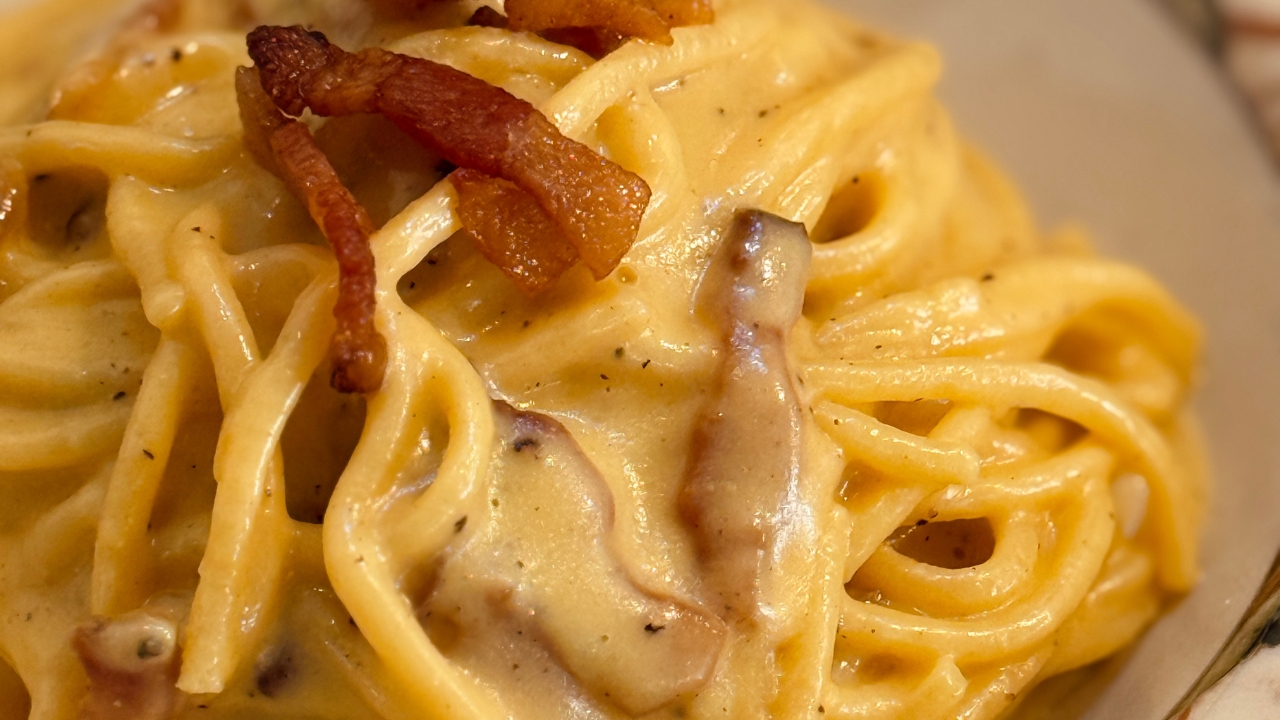
Gricia and carbonara are often grouped together, but the real difference is that gricia is simply a carbonara without the egg.
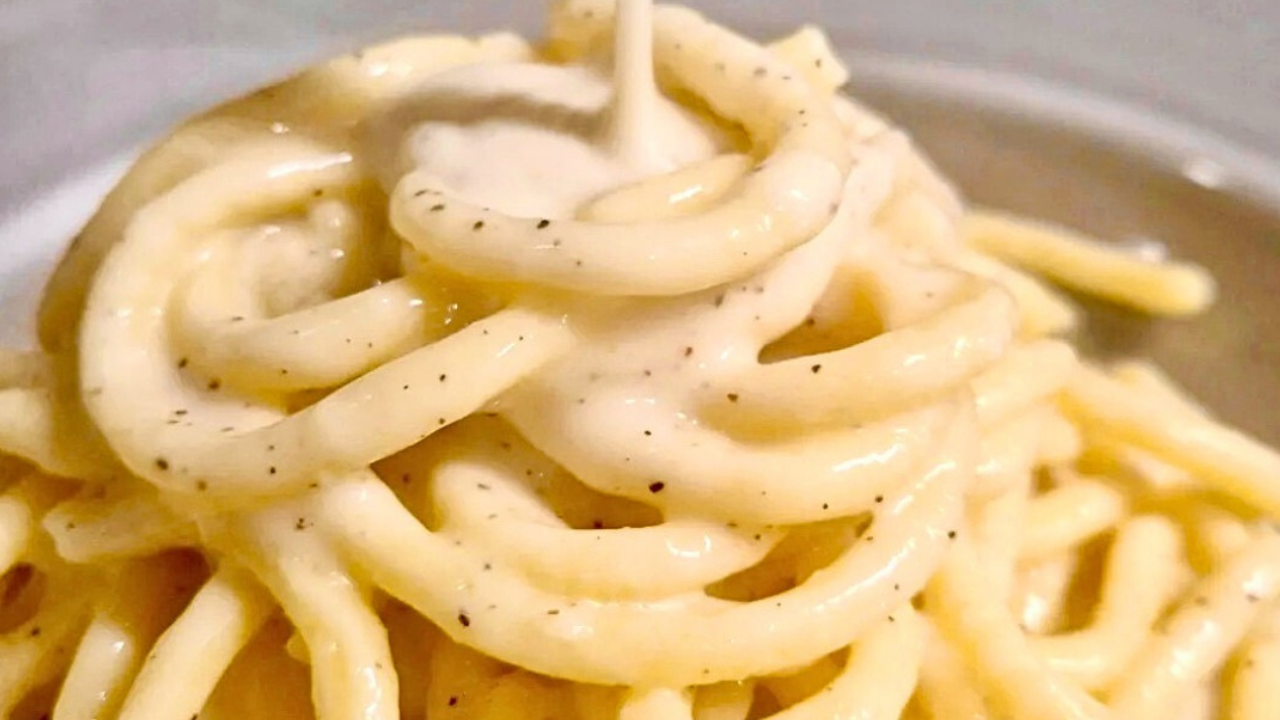
Over our years in business, we’ve noticed time and again that there are quite a few doubts surrounding roman pasta dishes. So, let’s clear up the differences between gricia, carbonara, cacio e pepe, and amatriciana.
Take cacio e pepe as your base, add guanciale, and you get a gricia. Depending on whether you then decide to add tomato or egg, you will end up with an amatriciana or a carbonara respectively.
To clear up any confusion, we’ve laid out the family tree of these recipes below—the very same one you’ll find on the placemats in our restaurant.
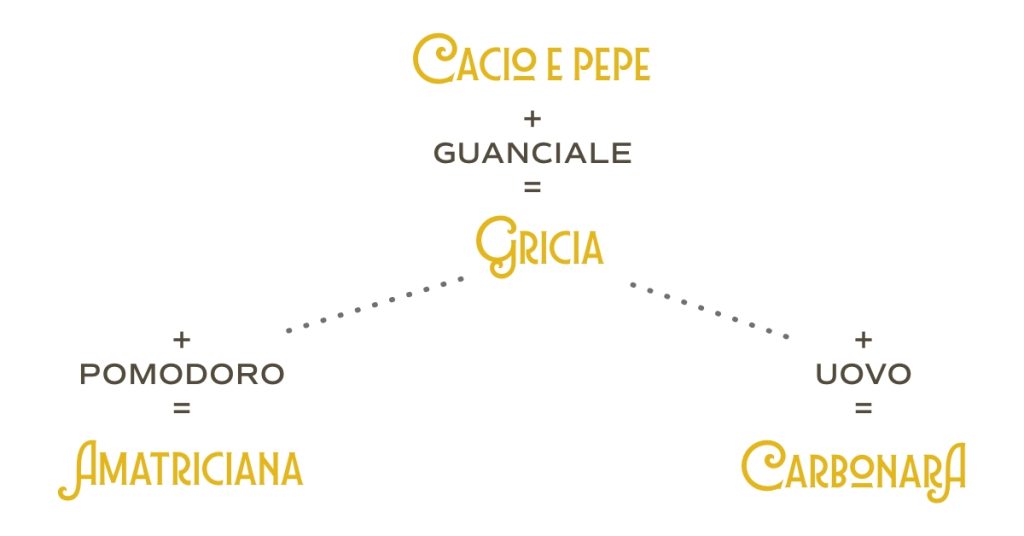
For us, pasta alla gricia remains a true institution of roman cuisine, with its savoury flavour and unique aroma, standing tall alongside its cousins amatriciana, cacio e pepe, and carbonara. Which one is your favourite?
If you want to taste the best gricia in Bologna, we look forward to welcoming you to our restaurant in via Testoni 2/B—the perfect place to try them all!