


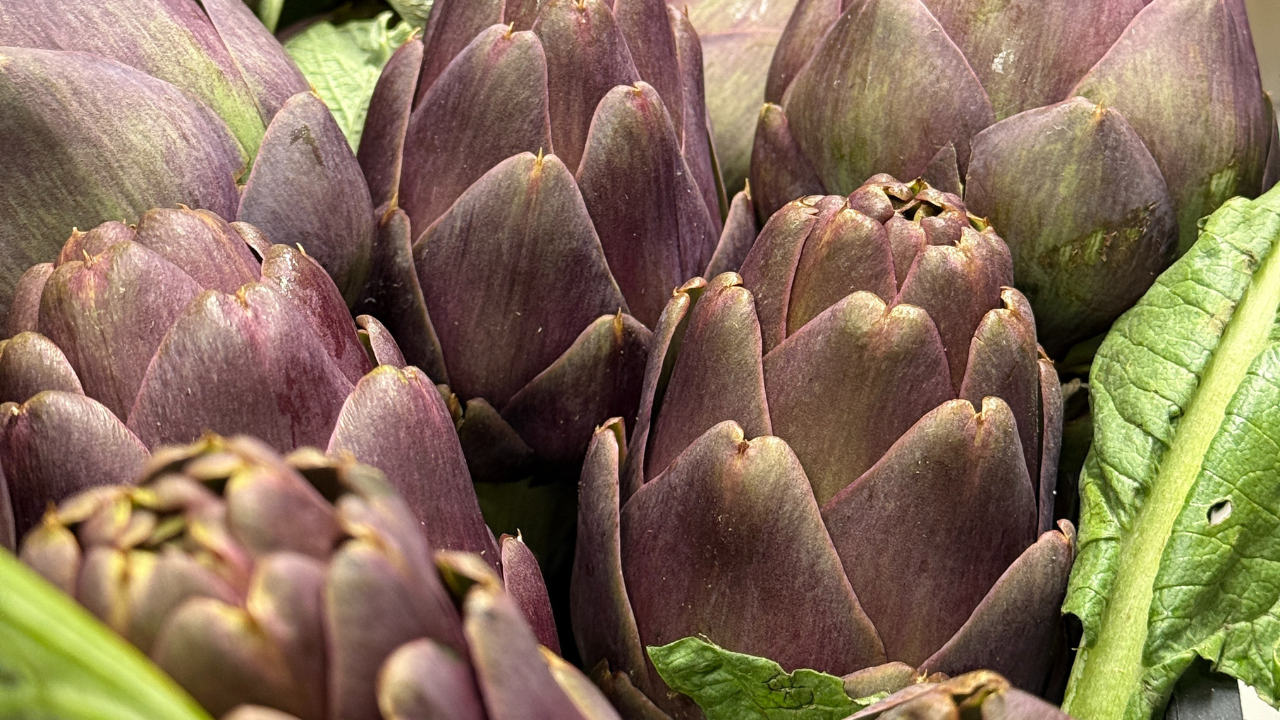
To learn how to stop them from browning, you first need to understand why it happens, and only then apply the most effective techniques to preserve their colour and freshness.
Why artichokes turn black (and why you shouldn’t worry)
As soon as you cut an artichoke, you trigger a chain reaction tied to the artichoke’s nature. Inside the flesh is an enzyme, polyphenol oxidase, which wakes up upon contact with oxygen and turns polyphenols into dark pigments. You can see the same effect when you cut an apple or a banana and it changes colour after a few minutes. With artichokes, the process is even faster, as their flesh is particularly sensitive.
They turn black, yes, but they are not toxic. Oxidation is a natural process; it doesn’t mean the artichoke has gone off or is harmful to your health. At most, you might notice a slightly more bitter edge. Let’s just say it is more a matter of kitchen pride than food safety.
The classic route: using acidity
The best-known way to stop the enzyme in its tracks is to lower the pH. An acidic environment puts oxidation to sleep, letting you prep large batches of veg without rushing.
Water and lemon (or sparkling water)
Your gran’s method always works: a bowl of cold water, freshly squeezed lemon juice, and dunking the artichokes as you prep them. If you are working on one piece at a time, you can even rub half a lemon directly onto the cut surface to “seal” it instantly. This system only has one flaw: it leaves a trace. If the recipe doesn’t welcome citrus notes, it could be an issue. In a pinch, if you’ve run out of lemons or just don’t want that aftertaste, use very cold sparkling water. The carbon dioxide makes the water slightly acidic, just enough to slow down the browning until you turn on the stove.
The glove trick
A quick practical note: oxidation doesn’t just stain the artichokes; it stains you too. If you have a whole crate to prep, wear latex or nitrile gloves. Otherwise, you’ll end up with black fingers for two days, and lemon won’t be enough to scrub them clean.
How to keep artichokes from browning without lemon?
Many look for a solution that avoids lemon, whether for taste reasons or to keep from adding acidity to delicate recipes. Here, the alternatives are varied and, in some cases, even better.
The Roman method: water and flour
The most traditional method, typical of Roman kitchens, involves using water and flour. Once the flour dissolves in the cold water, it creates a very light coating around the artichoke that significantly slows down the browning process. It is a perfect technique for carciofi alla romana and alla giudia, because it never alters the final flavour.
Natural and flavourless solutions
Parsley water remains one of the best natural, lemon-free solutions, as it acts as an antioxidant without interfering with the recipe. The leaves, rich in natural antioxidants, create a protective environment that fights off browning while leaving the taste completely untouched.
Finally, there is a more professional solution: using ascorbic acid, which is simply vitamin C. It is easy to find in powder form, has no taste, and just a small amount dissolved in water is enough to keep your artichokes perfectly bright.
Cooking and storing: don’t ruin everything at the end
You’ve worked hard to prep them properly, so there’s no point ruining the colour in the pan. If you are boiling them, still add an acidic element to the cooking water (a splash of vinegar or lemon) to lock in the colour. If you’re pan-frying them, like when making them trifolati, the hot oil acts as a natural barrier: the key is not letting them sit on the chopping board for too long before tossing them in.
Once cooked, air is the enemy. Do not let them cool down uncovered. Cover them with cling film touching the surface, submerge them in oil, or seal them in an airtight container. If you need to store them raw and prepped for a few hours, the only way is to leave them fully submerged in their water (acidic or floury). If you want to freeze them instead: blanch them quickly (two minutes), shock them in ice water to stop the cooking and set the green colour, pat them dry, and pop them in the freezer in bags.
Can you eat blackened artichokes?
The answer is yes: blackened artichokes can be eaten without any issue. Oxidation is not a sign of spoilage or a health risk, but merely a cosmetic change. A darkened artichoke might taste slightly more bitter, but it is still entirely edible as long as it shows no signs of mould, bad smells, or an overly mushy texture. If looks aren’t an issue, the artichoke is perfectly fine to use in any recipe. If you are looking for inspiration on how to prep them for your next dinner, click here to find plenty of ideas on how to cook them.
If reading all this has left you craving proper Roman dishes made the right way, remember that er carciofo, quanno è bono, parla da solo—when an artichoke is good, it speaks for itself.
To truly taste it, come to Pistamentuccia or book directly on WhatsApp at this link: te facciamo sentì Roma—we’ll make you feel like you’re in Rome… right here in Bologna.